
120 Years in the Making
 120 Years in the Making
2025 marks the 120th anniversary of diplomatic relations between Norway and Thailand. This significant milestone is a reason to celebrate the past and to look ahead to a bright future. As both sides look to enhance ties, strengthening sustainable development and Environmental, Social, and Governance (ESG) practices are seen as keys to success.
Dating back to 1905, the relationship between Norway and Thailand is described as a long journey of friendship. There was the legendary visit of H.M. King Rama V in 1907, who brought Yara fertiliser, which was known as Norsk Hydro, back home. The Royal Families have long maintained a cordial relationship.
Today, tourism between the two countries is thriving. Norwegians enjoy the warm climate, pristine beaches and cuisine found in the “Land of Smiles”. Thais are in awe of the natural beauty, snow and Aurora Borealis sightings.
Our partnership is one set to flourish for the next 120 years and beyond. The signing of a wide-ranging free trade agreement (FTA) between the European Free Trade Association (EFTA) and Thailand in January 2025 is proof of that.
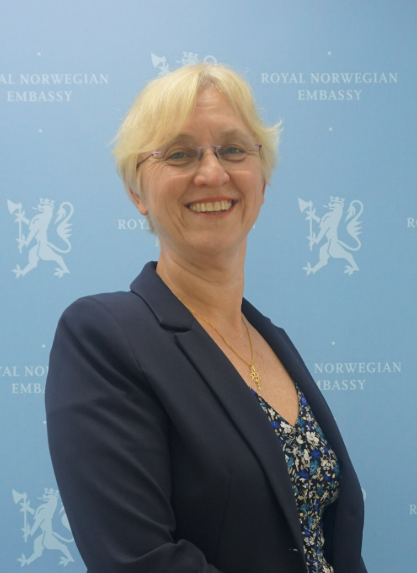
“We are confident that the EFTA-Thailand Free Trade Agreement will enhance trade and investment opportunities between Norway and Thailand,” H.E. Ms Astrid Emilie Helle, the Ambassador of Norway to Thailand, says. “Further collaboration between Norway and Thailand is promising. We look forward to the next hundred years of an excellent partnership built on transparency, trust and shared commitment to sustainability. It paves the way for future growth and mutual benefits between our two countries.”
Good corporate governance and sustainability are among the notable areas where the partnership can be strengthened. Thailand has set ambitious climate targets, is improving several areas related to human rights and has pledged to become more transparent. Continuing progress is vital.
“ESG and sustainable development is a global issue which Norway gives great importance to.” Ambassador Helle states. “Rather than challenges, we see opportunities of further cooperation. In a global economy, one country cannot work alone to reach its ESG and Sustainable Development Goals (SDGs) targets. We are looking forward to engaging with Thailand on the bilateral, regional and multinational levels in this agenda. Commitment and determination from all stakeholders are needed to drive this agenda forward.”
Cooperative approach
The EFTA–Thailand FTA includes a robust chapter on sustainable development with firm commitments to environmental protection, climate action, labour rights and gender equality. This will be an essential starting point for further cooperation moving forward.
Also shaping the relationship is the Transparency Act adopted by Norway in 2022 as a way to promote respect for fundamental human rights and decent working conditions throughout the supply chain of Norwegian companies. It covers both domestic and international operations.
“This Act is aligned with the Organisation for Economic Co-operation and Development (OECD) guidelines, stating that enterprises shall carry out due diligence in accordance with the OECD guidelines for multinational enterprises. Decent working conditions mean work that safeguards fundamental human rights pursuant to health, safety and a good environment in the workplace, and that provides a living wage,” Ambassador Helle notes. “Norwegian companies have adopted this to their activities in Thailand. Such implementation could inspire Thai and international enterprises in the country to improve working conditions and to ensure that their suppliers follow good practices.”
It should be noted that Thailand has made strides in this and other initiatives related to ESG and SDGs. Shared knowledge and experiences can be invaluable on the journey.
“Thailand was the first country in Asia to launch a National Action Plan on Business and Human Rights. At COP29 in 2024, Thailand reaffirmed its commitment to climate action and its national target to reach carbon neutrality by 2050,” Ambassador Helle says. “Additionally, Thailand has started the accession process to become a member of the OECD. This will require the country to make sure regulations and measures related to trade and investment are aligned with international standards. Norway is ready to support Thailand in its effort to become a member of the OECD.”
There may be an opportunity for Norway to assist Thailand with its goal to reach carbon neutrality as well.
“Norway aims to be climate neutral by 2030. This target includes the initiative to support carbon emission cuts in other countries. In 2024, the Norwegian government established a USD740 million fund to support emission reductions and green growth in developing countries,” Ambassador Helle highlights.
Investment focus
Thailand has become a hub for global investment. And while the country has proven itself to be a reliable partner, it must keep pace with evolving global priorities. Securing future investment is dependent upon its ability to adapt.
“In Norway, we believe that good governance and transparency are critical for economic competitiveness. Investors and financial institutions are increasingly taking companies’ ESG performance into account, and ESG reporting is the way organisations disclose their progress,” Ambassador Helle states. “Compliance increases business ethics and improves brand reputation. Businesses with higher ESG ratings build trust and enjoy greater access to funding.”
On the good governance and transparency front, Thailand has made some progress. Yet, there is still work to be done.
“The Norwegian government has strict regulations for Norwegian companies to follow good corporate governance. The Transparency Act is applicable to medium to large businesses in Norway with the production of goods and provision of services in Norway and supply chains across the world,” Ambassador Helle states. “Thailand’s efforts to promote transparency and ease of doing business could therefore make the country a more attractive investment destination.”
Many countries around the world have prioritised good governance and transparency throughout all parts of their supply chain. There are also a few other areas Thailand can improve upon to increase its standing among investors.
Ambassador Helle underlines this by saying, ‘‘Norwegian companies are looking for long-term investment. Predictability is critical to our investors. Besides that, the Norwegian Sovereign Wealth Fund has also invested more than Baht 87 billion (USD2.6 billion) in the Thai stock market. Good corporate governance and sustainability will encourage more investment from Norway.’’
“Access to renewable energy could also help making Thailand become more attractive for Norwegian and international investors,” Ambassador Helle says. “For companies to reduce their carbon footprint and be competitive in the global market, access to renewable energy for production is becoming increasingly important. Therefore, sufficient access to renewable energy could encourage international investors to invest in Thailand.”
Ambassador Helle points out that a functional system supporting circular economy development could prove beneficial as well.
“A functional system to support circular economy, such as the extended producer responsibility (EPR) scheme, would benefit Thailand’s environment protection and sustainable development initiatives and could also accelerate investment opportunities in the circular economy sector,” Ambassador Helle adds.
There are some examples of Norwegian companies in Thailand launching initiatives related to sustainable development, good corporate practices and decent working conditions. Ambassador Helle highlights Jotun Thailand’s installation of a solar rooftop to support their access to renewable energy and ensure green production.
Elsewhere, Yara Thailand adopted a wage scheme that pays employees above the national minimum wage to make sure that the company’s staff could afford a decent living. Efforts like these can inspire other businesses in the country to make similar changes.
Fact Box
- Diplomatic relations between Norway and Thailand began in 1905
- The EFTA-Thailand Free Trade Agreement was signed in January 2025 and is expected to deepen economic ties between Thailand and the EFTA countries
- The Norwegian Sovereign Wealth Fund has invested Baht 87 billion (USD 2.6 billion) in 166 companies listed on the Stock Exchange of Thailand
- In 2024, Norwegian companies created about 5,000 jobs in Thailand
- Many Norwegian companies operating in Thailand have policies focusing on sustainable economic development and good corporate practices
For other interesting articles from our members and chamber activities, please visit our website.